 August 20 2025, 08:15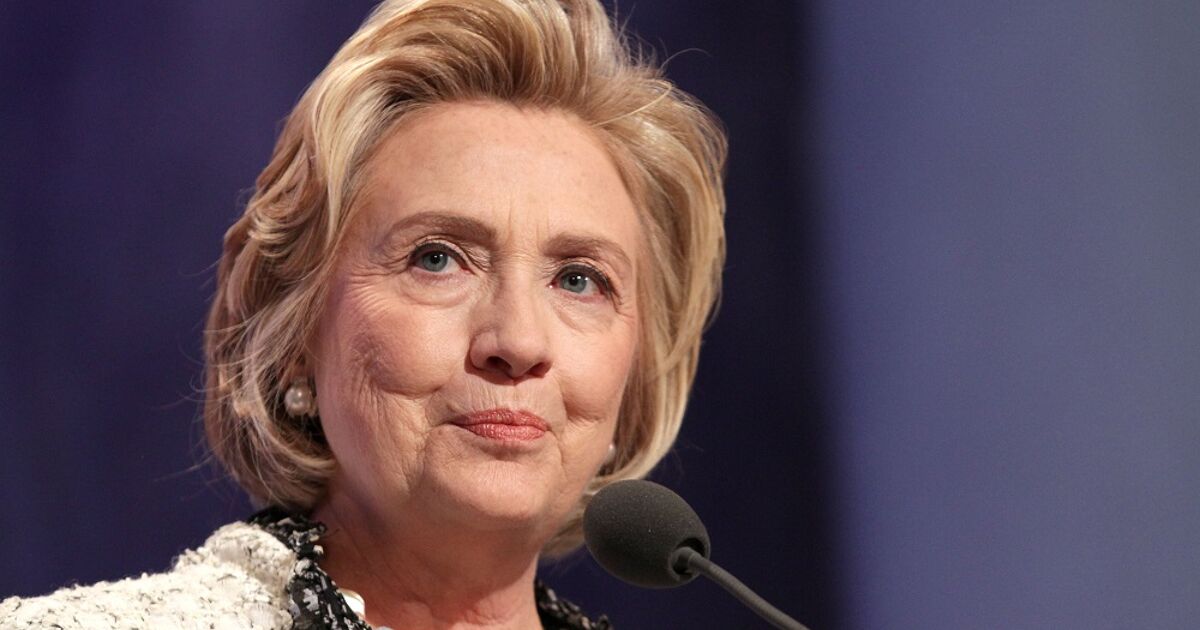
Former Secretary of State Hillary Clinton has warned that Republican judges will quickly overturn Obergefell v. Hodges, the 2015 Supreme Court decision that legalized same-sex marriage nationwide. Legal experts disagree with her, saying conservatives are far more likely to use free speech and religious liberty arguments to erode non-discrimination protections that require businesses and government employees to treat queer and cis-het people equally.
“It took 50 years to overturn Roe v. Wade [the Supreme Court decision legalizing abortion access]. The Supreme Court will hear a case about gay marriage,” the 2016 Democratic presidential candidate predicted in the August 15 episode of the Raging Moderates podcast. “My prediction is, they will do to gay marriage what they did to abortion. They will send it back to the states.”
Related
Donald Trump could go after same-sex marriage rights. We talked to legal experts.
She then told “anybody in a committed relationship out there in the LGBTQ community… You ought to consider getting married. Because I don’t think they’ll undo existing marriages, but I fear that they will undo the national right, and so, fewer than half of the states will recognize gay marriage.”
Clinton’s comments seem especially timely considering that Kim Davis — the four-times-married, conservative Christian former Kentucky county clerk who infamously refused to issue a marriage license to a same-sex couple following the court’s 2015 ruling — recently asked the Supreme Court to take her case, her second such request.
Never Miss a Beat
Subscribe to our newsletter to stay ahead of the latest LGBTQ+ political news and insights.
Subscribe to our Newsletter today
Anti-LGBTQ+ advocates hope Davis’ case could be the one to lead the justices to overturn marriage equality. After all, Supreme Court Justice Clarence Thomas argued in 2022 that the same legal reasoning used to overturn abortion access could also be used to overturn marriage equality.
But the Supreme Court gets about 10,000 petitions a year asking it to deliberate on various cases — the court agrees to hear only 75 to 85 of these cases, according to The Judicial Learning Center. Even Bill Powell, the lawyer representing the same-sex couple in Davis’ case, thinks the Supreme Court won’t hear her case.
“Not a single judge on the U.S. Court of Appeals showed any interest in Davis’ rehearing petition, and we are confident the Supreme Court will likewise agree that Davis’ arguments do not merit further attention,” Powell said.
Chris Geidner, the gay publisher and author of Law Dork, told LGBTQ Nation in January that at least four Supreme Court justices would have to agree to hear such a case before the court would take it up.
In a June interview with The Cincinnati Inquirer, the history-making plaintiff Jim Obergefell noted, “We have two sitting Supreme Court justices, Clarence Thomas and Samuel Alito, who said they want to overturn Obergefell… 10 years after the decision, I never thought I would be worried about marriage equality continuing as a right in our nation… We have state legislatures passing resolutions urging the court to overturn the case… because there are people who refuse to let it lie. I just honestly don’t understand why. How has any queer marriage ever impacted a straight marriage? It hasn’t.”
Even if the Supreme Court did take the case, Geidner said he didn’t think a case like Davis’ would provide sufficient legal reasoning to overturn same-sex marriage entirely. Rather, he said that a successful religious freedom or free speech challenge to Obergefell would do other “bad things,” like hollow out civil protections or public accommodations for same-sex couples, essentially inconveniencing or endangering LGBTQ+ couples but not outright denying them the right to a marriage license.
Gay legal journalist Joseph Mark Stern agrees somewhat with Geidner’s take. In recent Bluesky posts about Davis’ case, Stern wrote, “Recent panic that the Supreme Court might soon overturn marriage equality is unwarranted—the justices are highly unlikely to take up the case that has people worried. And this freak-out risks diverting attention away from the court’s subtler, ongoing attack on gay rights.”
“At this Supreme Court, the biggest realistic threat to gay rights isn’t outright reversal of Obergefell, but the ongoing abridgment of gay equality in the name of religious liberty and free speech,” Stern added. “The Supreme Court has also weaponized the First Amendment to legalize discrimination against same-sex couples in public accommodations, a project that will expand in the coming years.”
What would happen if the Supreme Court did overturn same-sex marriage?
Clinton was correct when she said that, if Obergefell were to be overturned, then the right to same-sex marriage would fall back to the states.
In 2022, then-President Joe Biden signed the Respect for Marriage Act (RMA), a law that repealed the 1996 Defense of Marriage Act (DOMA) and required the federal and state governments to recognize same-sex marriages that occur in states where they are legal.
Currently, 25 states have both laws and constitutional amendments banning same-sex marriage, five have just statutes banning it, and five others have just constitutional amendments banning it.
If this happened, a battle between pro- and anti-marriage states could emerge. Republican attorneys general and legislatures in states with same-sex marriage bans could argue that they should be exempt from having to recognize same-sex marriages from states where such marriages are legal.
Jenny Pizer, chief legal officer of Lambda Legal, told LGBTQ Nation last January that the Full Faith and Credit Clause (located in Article IV, Section 1 of the Constitution) requires states to respect the public records, judicial proceedings, and acts of other states.
The inconsistency of marriage laws between states, Pizer added, would be a problem not only for same-sex couples who need to have secure legal status, but also for government and private entities and all sorts of people who need to know what people’s legal rights are.
If Republicans gained majority control of the Senate and changed the current 60-vote threshold needed to repeal the RMA, not all of the aforementioned state laws and constitutional amendments banning same-sex marriage would immediately go into effect, Geidner added.
For example, if a state legalized same-sex marriage through a state court decision — like Iowa’s Supreme Court did in 2009 — then same-sex marriages would remain legalized there. If a state legalized same-sex marriage through its legislature, Geidner said, then such marriages would remain legal, even if the RMA and Obergefell were both overturned.
In short, the federal government wouldn’t have to recognize those marriages if Obergfell and the RMA were both overturned, but whether other states would have to recognize them is uncertain.
While both Pizer and Geidner said that it’s unlikely that Republicans will try to repeal the RMA, Geidner said that state and local governments can still take significant action to protect same-sex couples by repealing their same-sex marriage bans and passing additional shield laws, anti-discrimination protections, and other legislation and ordinances to help protect LGBTQ+ people’s benefits and rights.
Subscribe to the LGBTQ Nation newsletter and be the first to know about the latest headlines shaping LGBTQ+ communities worldwide.